Generative AI Declaration Form
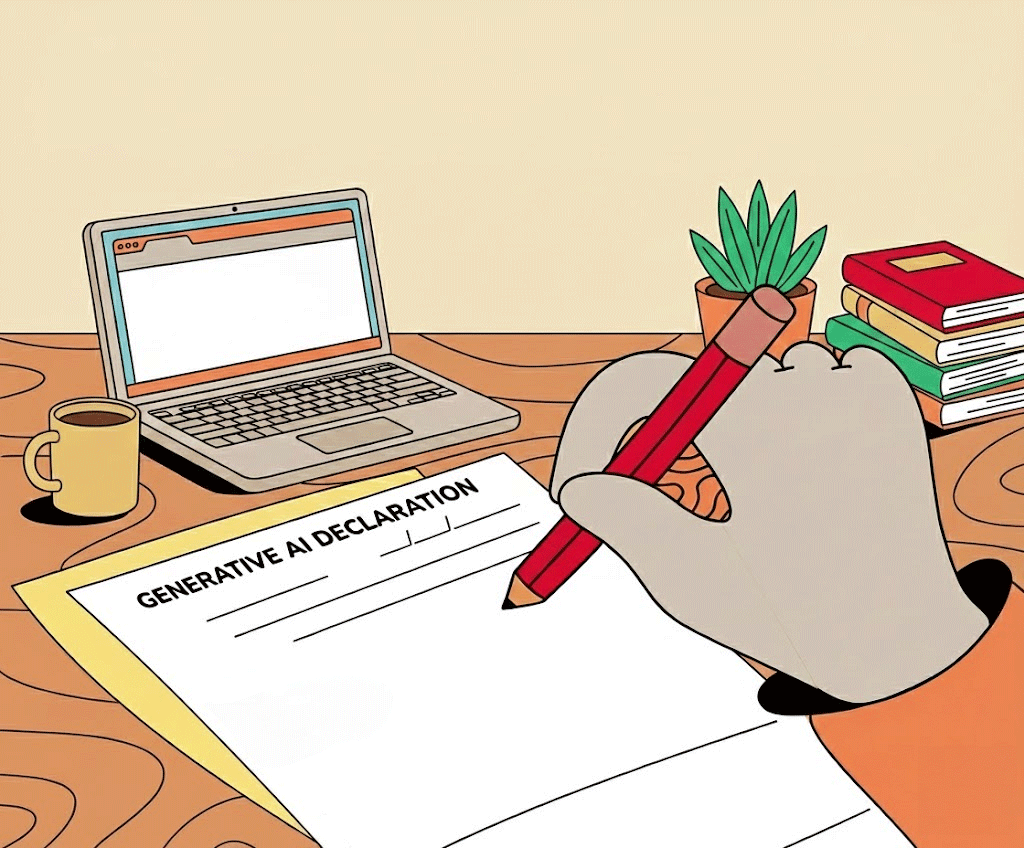
This tool provides a simple way to clarify what AI use is allowed on an assignment, and for students to record what they actually used to do the work.
Most integrity issues happen because expectations were unclear, not because students set out to cheat. This form fixes that by creating transparency before work is submitted.
Why this matters
Too many academic integrity conversations start with “I think you used AI.” That puts everyone on defense and isn’t a fruitful path to building a collegial relationship with our students.
This form moves the conversation earlier. Students document their process up front. Instructors set boundaries clearly. Everyone begins with the same understanding.
And it aligns perfectly with our Three Ms framework:
Misunderstanding . Students aren’t sure what’s allowed. They incorrectly broke the rules because they didn’t understand them.
Misuse. Students use AI in ways that undermine the skill the assignment was designed to assess.
Misconduct. Students knowingly break the rules and hide it. The form helps separate which issue you’re dealing with. Transparency makes each “M” easier to identify.
How the form works
The form lists 21 common tasks where AI might be used: brainstorming, drafting, editing, fact checking, coding, and more.
Instructors mark which uses are allowed or not allowed for that specific assignment.
Students check off what they actually used and which tools were involved, then sign to confirm accuracy.
The result is a clear, shared record of expectations and student decisions.
How this helps instructors
Set expectations. Different assignments require different AI boundaries.
Evaluate fairly. Review declared use before grading.
Spot the right “M.” Compare what students reported to what you observe.
Document decisions. A signed form adds clarity if concerns arise.
Have better conversations. Discuss specific discrepancies instead of assumptions.
How this helps students
Know the rules. Understand exactly what’s allowed on this assignment.
Work confidently. Use approved tools without worrying about accidental misuse.
Build good habits. Learn to document process and cite AI just like any other source.
Protect yourself. A completed form shows you followed the expectations you were given.
What the form doesn’t do
The form records intent, not proof. A student could still use AI without declaring it. But mismatches between the declaration and the submitted work become easier to spot. That’s where misunderstanding, misuse, and misconduct start to diverge.
This form isn’t meant to stand alone. Use it alongside your own evaluation and any detection tools you trust. Combined, they give a fuller, more accurate picture of how the work was created.
Questions about using this in your course? Contact me, and I'll help you fit it to your needs.